In This Article
Most of the time, data munging and data wrangling as terms used interchangeably. It produces some ambiguity at this point. Because both these terms are not identical.
There are some fundamental differences between them. Let’s discuss it in this blog.
What data munging contains
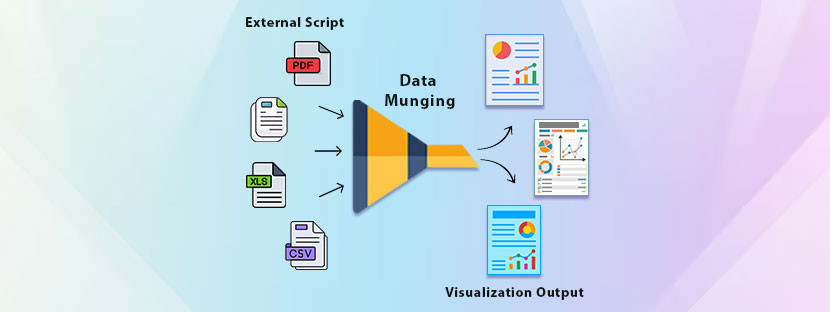
Data munging focuses on converting data from one format to another for ML applications. Basically, it is suitable for downstream analytics. It primarily focuses on transforming raw data into an appropriate machine-readable format. Data munging makes data more accessible and interpretable for the data users. Therefore, the decision-making process will also become powerful and accurate.
What data wrangling says
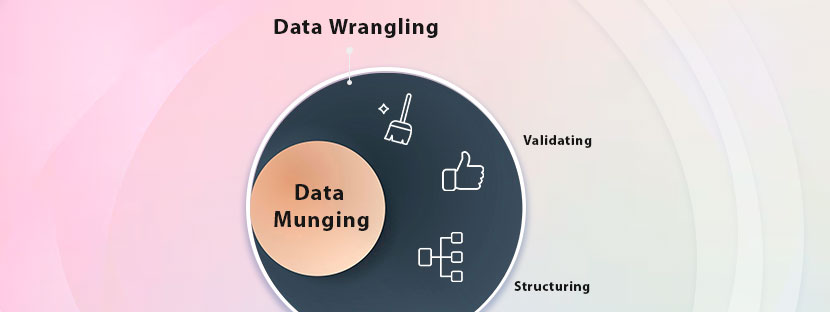
Data wrangling combines a broader set of activities that collect and prepare raw data for more straightforward analysis. It covers mostly everything, from discovering data structures to validating data. Plus, it involves tools and techniques to manage large datasets more efficiently.
💡 In other words, data wrangling handles various things. It means organizing unstructured data, sorting relevant parts of the data, consolidating data sources, and many more things. In short, if you want to turn your raw data into a more manageable and coherent state, data wrangling is the right option for you. This process can make your raw data ready for further processing or analysis.
Real differences between data wrangling and data munging
| Points | Data Wrangling | Data Munging |
|---|---|---|
| Scope of work | Prepare data from the core level. From discovery to validation, everything | Only covers format conversion and data standardization |
| Need | Keep the data preparation workflow moving and manage the entire process | Transforms raw data into best best-suited data format. |
| How it works | It involves various processes, including data exploration, quality assurance, data integration, and other matters. | Some compact processes are part of data munging, which include data cleaning, standardization, changing the data format, etc. |
| Nature | Comprehensive in nature | Narrower than wrangling |
| Usage & tools | Bi tools and tools that use programming languages are good for wrangling databases. | Python, SQL, and ETL tools are common when it comes to munge data. |
If we think rationally, data wrangling appears more comprehensive than data munging. This is a true statement. 👍 Yes, data wrangling covers broader things than data munging. So, we can say that data munging is a subset of data wrangling that offers the same type of things.
🗪 From a neutral perspective, the focus on data munging is a little narrower than data wrangling. However, data wrangling is a little more comprehensive and can deal with nuanced aspects of data. Basically, it prepares data for seamless analysis.
Why businesses need wrangling and munging
At present, businesses collect data from various sources for various purposes. Collecting data from vast sources is comparatively easier than maintaining them for further processes. When it comes to sending data for further analysis, there comes a major roadblock. Simply because you cannot send raw data for analysis.
Data munging or data wrangling bridges the gap between raw data and analysis-ready data. These processes are here to prepare the data for the final analysis. Let’s discuss this in detail, the reasons why you need these processes.
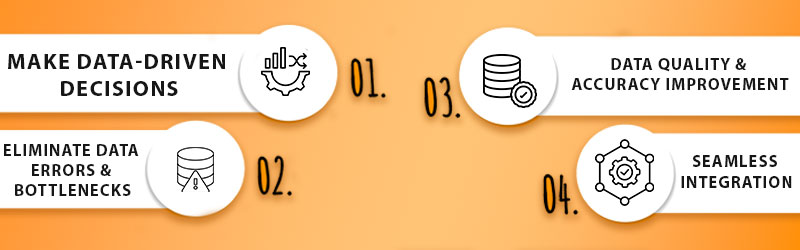
Make data-driven decisions
Banking and financial institutions require fresh data to feed their data analysis processes. It is super important for assessing risk areas, detecting fraud matters, and ensuring regulatory compliance. Not only financial institutions, but healthcare institutions also demand reliable data. Data munging and wrangling standardize patient records and maintain health regulations with proper data channels.
Data quality & accuracy improvement
Having poor data can cause flawed analysis. As a result, you can miss great opportunities plus make costly mistakes at the same time. But when you have a data munging process aligned with your data pipeline, you can remain stable. It can remove duplicate records from your database. Find and record missing values in the database. And, fix the formats and structure of the database to the optimal level.
Eliminate data errors and bottlenecks
Data errors can skew data insights and create bottlenecks in the process. Most of the time, data errors happen because of manual data entry. But it’s quite natural. Errors can happen, but they should not create any burden on the data pipeline. Data munging cleans out the issues and makes a good flow of data into processing systems.
Ensure seamless integration
Having all data in one singular data format looks awesome, but painful to achieve. Businesses usually collect data from different locations in different formats. Data stored in different formats is difficult to transfer or move. At this point, data munging comes into play to provide data uniformity.
Data munging and wrangling enable a seamless flow of data into your system. For examples;
✔ Putting sales data into the CRM system smoothly to manage the financial reporting system.
✔ Collect marketing data from various channels to get a unified view of customer engagement.
✔ Managing the flow of operational data across all your global offices up to a standardized level.
Integrated data provides visibility and connects the dots between various business functions. It encourages more strategic business decisions. Data wrangling and munging are the basis for creating such a flow into your databases.
Used Cases of Data Wrangling & Munging
Data munging and wrangling play a major role across all sectors, wherever data is being used. Data wrangling and munging influence the quality and structure of the data. That’s why these processes are popular across all the data verticals. Check it out here for some examples.
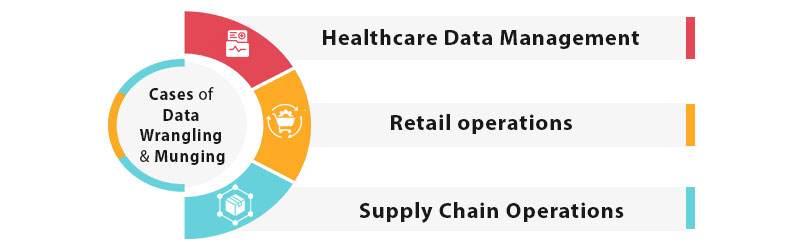
Healthcare data management
Data such as raw patient inputs, clinical trial records, medical research data, etc, are entered into the healthcare system in different formats. Data munging unifies these datasets and normalizes them, too. Therefore, medical operations run smoothly and in an integrated way.
Retail operations
Understand customer behavior in a better way using the real-time data insights. Data munging can segregate customer data into various parts to smooth the analytics parts. Validate transaction histories, customer feedback, etc, before you put them for processing using data wrangling techniques.
Flow of supply chain operations
From logistics to production, the supply chain includes everything. Data munging harmonizes all the collected data. Also, it identifies inefficiencies within the data procedures and fixes them using the right techniques. As a result, it reduces the unnecessary costs, quicker the delivery time, and alleviates the customer satisfaction level.