Digital data sounds cool, but there is a detailed process behind making data float around the digital database.
To be precise, it’s data virtualization, the name of this process.
In the following piece, we will discuss everything about data virtualization and explore its benefits.
Let’s go!
What is data virtualization?
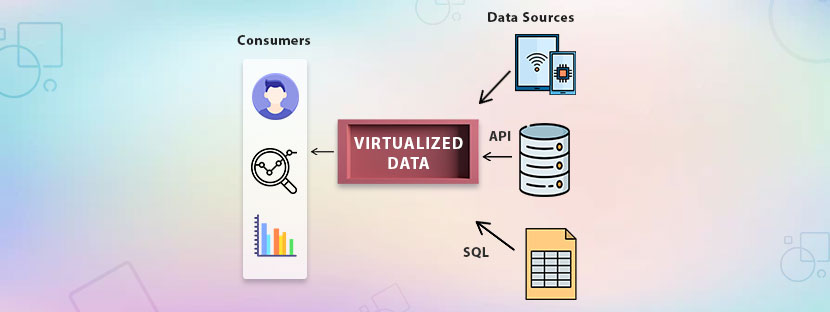
If there is a need to have a single layer to access your organizational data, data virtualization is your game. Data virtualization comes with a core technology that enables logical data management capacities.
With this technical process, you can create centralized data sources like data warehouses, data lakes, transactional databases, APIs, and other assets. Interestingly, data virtualization brings real-time access to stored databases.
Data virtualization plays a critical role in the development of AI-enabled technology . It’s a critical first step for application development and deployment.
Why data virtualization?
Data virtualization unlocks the hidden potential of data. It allows organizations to use their existing data sources with complete flexibility and efficiency. Plus, it acts as a bridge that enables your AI-driven platforms to access and display data from external sources on demand.
✒️ Note: to have a virtual view, you need to store your data in memory. It will provide a layer of abstraction beyond the physical implementation of data. Plus, it makes querying logic plain and simple.
Drivers of data virtualization
Once you get your data in a virtual format, there are no requirements to download it and then work. All you can get is real-time access, sharing data without the need for replication or double entries. Data virtualization breaks data silos and puts forward a fresh perspective on your data.
Let’s see what the driving factors of data virtualization include
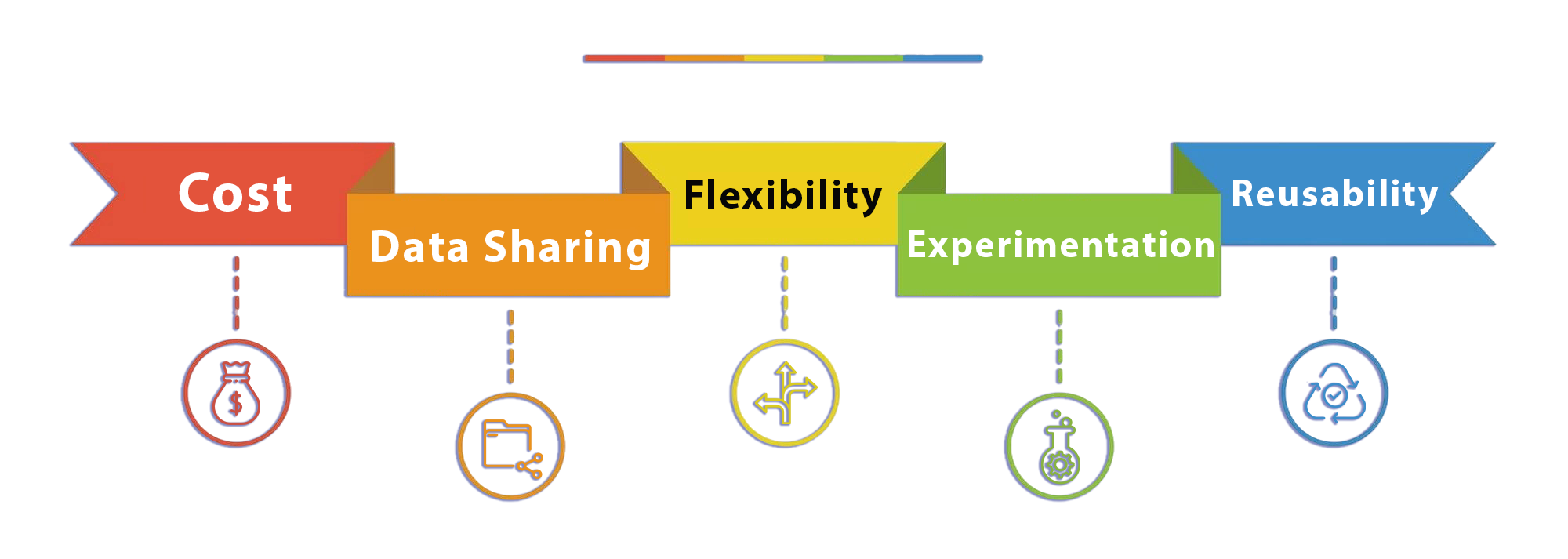
① Cost
Data virtualization costs less than other forms of processes like ETL (Extract, Transformation, Load). Sometimes, virtualization can become efficient to replace ETL processes when the requirements are light.
② Data Sharing
Physical transit of data increases costs as well as attracts sharp compliance. Data virtualization ends the requirement for the physical movement of data. It allows combining historical data from the data warehouse and bringing it to a cross-platform analysis. So, you’ll be able to respond to a particular query using third-party sources.
③ Flexibility
Data virtualization brings flexibility to your data integration architecture and the process. It allows data users to integrate and virtualize different data models and technologies. No need to move your data anywhere physically. Data virtualization can easily handle diverse sets of data, even the unstructured ones.
④ Experimentation
Data virtualization sometimes acts as a “sandbox” where various people can participate to make the tasks easy. This process is designed to get access to data for solving ad-hoc queries. Even the less technical roles, like domain-based citizens, can participate here for better business outcomes.
⑤ Reusability
Data virtualization benefits organizations from the reusability of integration artifacts across a wide range of business needs. It involves logical data warehousing, master data management, and more.
How does data virtualization benefit your organization?
Businesses get significant advantages when they simplify their data access across diverse systems. By deploying virtual data, organizations can streamline their data processing systems. Not only does standardizing the data processes, but virtual data also enables better security and increases agility. Let’s check it out here to see how data virtualization can benefit your organization from various perspectives .
⟢ Better data access and integration
Virtualization allows organizations to access data from disparate sources. Be it on-premises or in the cloud. You don’t even need to move your data from physical locations at all. Thus, it ensures the retrieval of data in real-time. Overall, you can bring seamless integration into your workflow through virtualization.
⟢ Improve agility & fulfillment
Adapt quickly to new data sources is possible when you put the data virtualization process forward. It makes data integration easy and faster. Your fulfillment teams can get data delivery quickly and start the process more efficiently.
🧠 In other words, virtual data makes the data process agile and strong.
⟢ Make your data visible in real time
Businesses need data access in real-time to make their decisions. Virtual data is readily available across your business processes. We can agree that making the right decision at the right time is extremely important for businesses to do. It helps companies to make the right decision because of the availability of the right data.
⟢ Better for your budget
Save the costs of large data warehouses or creating multiple copies of datasets. Virtual data is the ultimate saver at this point. All your data will be available online, so there will be no cost for the physical infrastructure. Further, the time and cost matters related to data transportation are near zero in this case. Ultimately, data virtualization is better for your organization’s budget.
⟢ Improve team collaboration
The best part of data virtualization is that it provides a unified view of your data. People from all departments of your organization can use the same data at the same time. Naturally, it will enhance team collaboration better. Organizations can make consistent decisions through this real-time collaboration.